 Electric Shocks
Original home-recorded guitar music, with keyboards and various synthesized backing. A few liberties with the great composers. Left click a title to listen.
A Fine Romance [5.04Mb playing time 2:12 mins]
Often the first piece a finger-style Spanish guitar beginner has a shot at. Written by that prolific composer 'A. Nonymous', Romanza is hereby given the electric treatment.
For Mrs Lopsided [2.97Mb playing time 1:15 mins]
The Boccherini Minuet entered my consciousness in the early 1960s via the brilliantly dark Ealing comedy "The Ladykillers", through its relentless performances on Alec Guinness's gramophone, as he and his dodgy accomplices, in the guise of a practising string quintet, were plotting their dastardly crime in the upstairs room rented from little old landlady Katie Johnson (Mrs Lopsided).
Praelude [5.65Mb playing time 2:28 mins]
I struggled with so many Segovia transcriptions of Bach preludes, I decided to write one myself that I could actually play.

Fresh Air (J S Bach) [5.4Mb playing time 2:51 mins]
Air from Suite 3 (on a G-string)
Bad 'n Eerie (J S Bach) [3.02Mb playing time 2:08 mins]
Badinerie from Flute Suite in B minor
Sarah's Band (J S Bach) [2.6Mb playing time 2:50 mins]
Sarabande from Lute Suite in Emi
Hooray Booray (J S Bach) [1.55Mb playing time 1:44 mins]
Bourre from Lute Suite in EMi
Besides being an enormously prolific composer, Johann Sebastian fathered 20 children, several who became accomplished composers themselves, testifying to the veracity of the title of one of my music books, "Bach's Organ Works". Surprisingly and disappointingly, having spawned such a musical dynasty, he has no known descendants living today.
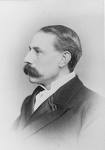
Mindor (Elgar) [2.38 Mb playing time 2:32 mins]
From the Enigma Variations (Nimrod) with apologies to Sir Edward
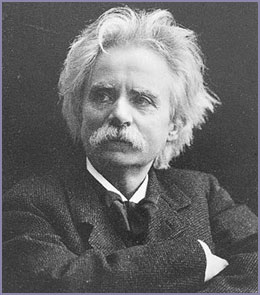
Go Anitra (Grieg) [2.20 Mb playing time 2:21 mins]
Anitra's Dance from the Peer Gynt Suite No.1 by Edvard Grieg, Norway's greatest (only?) composer, born 1843. The UK can almost claim him as one of their own, his family (originally 'Greig') having lived in Scotland before fleeing to Norway after the Battle of Culloden in 1746.
Gone Chopin (Frédéric Chopin) [1.84 Mb playing time 2:00 mins]
Under there somewhere is Chopin's CMinor prelude from the 24 Little Preludes. I am in good company - Barry Manilow also borrowed it for his 1975 hit "Could it be Magic".
Chopin (born in Poland in 1810) had a turbulent relationship with the French novelist George Sand, who similarly to George Eliot, was a woman masquerading as a George. Chopin never enjoyed the best of health and a great musical talent died aged just 39.
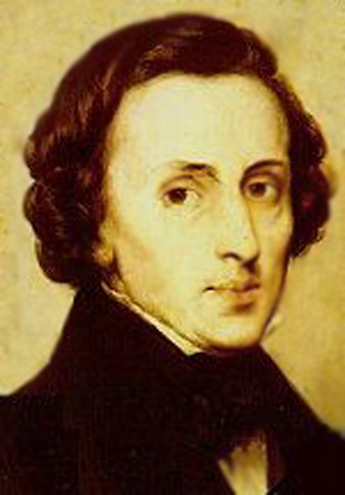
Recks Ya Hairdo (Francisco Tárrega) [1.98 Mb playing time 2:06 mins]
Recuerdos de la Alhambra (Memories of the Alhambra). They used to show some good films there - I remember it well.
This was almost Tárrega's most famous work. The most famous one? Nokia bought the rights to Tárrega's Gran Vals just to use two bars for the world's first musical ring tone. A bit of a let-down.
The Deer Fights Back (Stanley Myers) [2.84 Mb playing time 3:02 mins]
Myers, who was a prolific film scorer, wrote a version of his Cavatina for the virtuoso concert guitarist John Williams. Only years later did it achieve popular acclaim when it was used in the film The Deer Hunter.
Evidently he also penned the theme tune for the BBC's "Question Time" TV program.
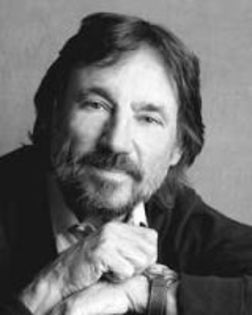
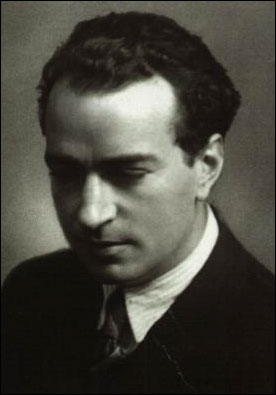
Orange Juice Freshly Squeezed (Joaquìn Rodrigo) [2.5 Mb playing time 2:44 mins]
Rodrigo was born in Spain in 1901. Diphtheria at the age of 3 left him almost completely blind. He learnt music from Braille - proof that misfortune and adversity are not insurmountable obstacles to outstanding creativity. He died at the ripe age of 97, having composed music throughout his whole life. His best-known work is the Concierto de Aranjuez - popularly known as the 'Orange Juice Concerto' as a result of have-a-go Brits trying to pronounce it properly.
It was written around 1940 at the time he and his wife lost their first baby. Strummed chords continually beat a 'pulse' throughout the adagio - apparently meant as a poignant reminder of the fragile nature of life itself.
Jupiter Falling (Gustav Holst) [1.1 Mb playing time 1:13 mins]
When I was young, I always imagined someone called Gustav Holst (originally Gustavus Theodor von Holst) must definitely have been German or Austrian, but in fact, he was born in that most English of suburbian retreats, Cheltenham, in 1874. Holst was persuaded to change his name during WW1, dropping the "Von", to avoid any suspicion of pro-German sentiment.
Ironic then, that the central section of "Jupiter" from his Planet Suite provided the music for the hymn "I Vow to Thee My Country", written as a response to the human cost of the Great War (verse added by Sir Cecil Spring-Rice). It rightly became one of the great patriotic singalongs, and has frequently been used at national occasions.
Claim to fame note: Holst called his hymn-music arrangement "Thaxted" - after the town in Essex where he lived for many years.
Hard to believe: Holst's brother, also born in Cheltenham, was Ernest Cossart who appeared in many Hollywood movies, alongside such stars as William Powell and Myrna Loy.
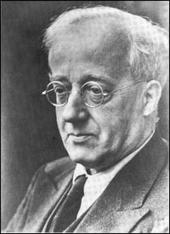

Oranga Tango (Jacob Gade) [2.35 Mb playing time 2:28 mins]
Gade was born in Vejle, Denmark in 1879 - ok, anyone name one other Danish composer? No? I didnt think so.
He was a violinist and composer of orchestral pop music. He wrote the Jalousie 'Tango Tzigane' or simply 'the Jealousy Tango' to accompany a silent film when he was leader of the orchestra of the Palads Cinema. It was instantly a stonking world-wide hit, and made Gade rich. When talkies were introduced it was featured in over 100 films, and the ongoing royalties funded a foundation for young musicians.
Arthur Fiedler, who first recorded it with the Boston Pops reportedly described Gade's follow-up symphonic opus as "one of the worst pieces of music I ever looked at." Another resounding success story for one-hit wonders.